OK.. it's my blog so if I can't post my own maps in development here... where can I huh?
Here's the map... it's still a work in progress hence the feedback. This is the 3rd map in a 5 map series.
It's for HL2 EP2.
http://www.mediafire.com/file/o1x8u9h4c69h86c/ep2_aquaduct-3_5.rar
Here's the feedback I received from an very kind individual who took the time to play my map and then feedback...http://www.blogger.com/img/blank.gif
This is the kind of feedback you should be looking for if you can get it. To each point below I'm going to add some comments of my own.
I won't mention the testers name but I would like to say thank you very much.
Any other comments from readers are welcome.
-----------------
The first gate I come to after the lift, on the left, only opens a fraction. I kept thinking it was how I was opening it. Eventually I realised that I wasn't allowed down there. I suggest blocking the door with something that obviously can't be moved with the Grav Gun. Perhaps a generator or something.
This is an issue with the player's visual dictionary. The player has just opened a door with a breakable padlock on it. The player then comes across a second door with the same set up. The assumption by the player (quite rightly) is that this door can also be opened too. The player has performed the act of breaking the padlock but the fact the door doesn't open means the player doesn't get rewarded for that action. Bad Aazell!
I found the first area too dark and I am not a big fan of dark areas. Perhaps have some of the torches all around.
As per my previous post on darkness. Getting the balance right between light areas and dark is very tricky. I have way too much dark in this first area. So more light must be applied for the player not to get frustrated.
The first zombie I encounter was too close to the corner and I could see him waiting for me. If you moved him further back and had him moving towards me as I turned the corner it would feel better.
Actually, same for the second zombie.
A quick fix but clearly this will make all the difference to the players reaction to that moment. As I have said previously the difference between something feeling right to the player and feeling wrong can be a simple small movement of an NPC.
I found both sets of steps a little steep. Didn't seem right.
I'm pissed at myself about this. The first area with the arches was a pain in the ass to seal and optimise. Now I need to rethink some of it. Thinking of removing the stairs completely...
There is a round opening that allows barrels to fall through but not the player. I tried to jump down there and was frustrated not to be able to. The "cover" of spiders web is not a strong enough indication I can't go there.
The web referred to above was a response to a challenging issue. I had manholes where NPC_Fastzombies would spawn from. How do I communicate to the player that they can't go down there yet leave it open for the zombs to pass through. My solution was to place Player clip over it and a non-solid brush covered in the Antlion web texture. I think it works in the later area but without a light on the web in the first instance it's very hard to see and therefore doesn't work. Will add a light.
I got the feeling that the handle that open the gate carried on forever. I didn't see it stop. Does it?
A simple fix but it's interesting that the player picked up on it. The turning degrees of the turning handle is currently set to 3000. Lol. I honestly didn't think the player would care if it stopped or not as long as they could get under the door. But clearly the expectation is that they are to turn the handle until it stops and that indicates that the door is fully open. So I've learned that even though the main reason for turning the handle is to open the door, it's not the door that the player focuses on. Interesting stuff innit!
The area with the three fans is excellent but it feels too much like a place in a game than a real place. For example, why would all those crates be there? Think about it. That would mean they would have to have been manually carried there and that doesn't seem "real" to me. Of course, this area needs something, but I would suggest just rubbish would be enough and maybe some tools etc.
Very true.. A further detailing pass on this area with a few fake doors added should clear this up and hopefully make it feel a little real world.
All three fans stopped permanently after I turned them off a few times. Is that supposed to happen.
This is exactly the sort of testing feedback I need. It's a very good example of why the mapper is not the best person to test their maps. I'd become so familiar with playing through the map I simply rushed through each fan area on the first time I hit the reset button. It didn't occur to me that players might hesitate and hit that switch more than three times. LOL
I would delay the fast zombie for a fraction longer, as when I entered the area I looked around and didn't seem him get sucked into the fan. of course, it's pretty obvious, but if he is there to demonstrate, as I assume he is, it would be better to have it very obvious.
A moment I'm really proud of was missed by the player simply by triggering it slightly too early, I think we're literally talking about a 2 or 3 second delay but it makes all the difference.
The next large area looked fantastic but this is where I really wished I had recorded the demo because it was boring to play. The first thing I did was jump down onto one of the supports and collected the ammo etc. I then jumped across to the main area. A quick look around told me that a poisonous zombie was behind the door.
I don't know what made me do it, but I decided to jump to the next support. At that moment, the lights seem to come on and the fast zombies appeared. I simply stood next to one of those pipes and as they came out shoot them. Of course, they also cam out from other pipes but jump across and when they land it's easy to pop them.
Another classic example of the fact that the player will not always play an area as you saw them playing it. My intention with the fast zombie Arena was have the player constantly moving around being chased by zombs. It's much more fun that way.
By putting the ammo next to the zombie holes I gave him a perfect combination of ammo and spawn point so he just stood there and capped the zombies that appeared. Must have been really dull. For those of you that play the map, try and stay over on the main area and you'll get the idea of what I was going for.
I now have to rethink this area a little to stop the player moving onto the spawning platforms.
I feel that that support area should be just for the fast zombies and I should be forced to move around in the main area.
The double fan was fun, but when you smash the crates the piece fall to the ground. I suspect there's nothing you can do about that.
A minor tickbox change to my trigger_push brush, but when the debris from the broken crates falls to the ground when everything else is being blown up to the roof it can break the mood and the illusion.
The vertical elevator shaft is fine, but those three fast zombies are wasted. They should appear the moment I enter the corridor, so I have to run to break the wood or stand and fight.
When I got to the elevator shaft I assumed the blades were to kill the zombies or break the wood blocking the entrance. I tried three time to jump into the elevator, thinking this was the way forward. It too a few moments to realise that I needed to cut the cables.
Yes my big finale to this area. It clearly needs a little more work to stop the player from wanting to access the elevator and to stop the player from heading back down the ladder and killing the zombies. I think I will have the zombies climb up towards the player. Should add some pressure.
----------------------
Hope this gives you a good idea of the sort of feedback you should be looking for and I think it gives some great examples of the traps you can fall into when putting a map together.
Hope you enjoy the map in it's current form. I'll be posting a new version soon.
Let me know any further feedback you have, and please keep it constructive... (be gentle).
Showing posts with label Theory. Show all posts
Showing posts with label Theory. Show all posts
Wednesday, 10 August 2011

Tuesday, 26 July 2011
Loops
The mapping method known as looping is the practice of having the player move through the same environment multiple times.
This serves several purposes...
1. You get more gameplay out of a small map space.
2. The player gets to see the area you've created from several different perspectives
3. The player has the nice surprise of discovering that they have returned to a familiar location after a section of gameplay
As a mapper, whenever I create a playing space I'm looking to get the most amount of gameplay out of that space as possible. It can take weeks of work to create a convincing environment so to have the player blast through it in less than a minute is a huge waste of great work.
Consider a map set on a city street.
A single pass at this area may be set at street level. A firefight amongst cars etc..
Now consider how much other playing space has not been used.
The sewers under the street, the floors of the buildings on either side, the rooftops, you could add balconies or scaffolding.
By having the player pass through the area several times, winding back forth through it, an area that once offered a two minute firefight can now incorporate around fifteen minutes of gameplay if done correctly.
Looping isn't just to make the mappers life easy. I think players don't like to have too many environments thrown at them too quickly. If bombarded with too many areas too quickly the player can often feel overwhelmed and disorientated.
Finally there's the loading times issue to consider. Lots of gameplay within one area means the game engine only has to worry about rendering one location for much of the map. It can improve performance within map and also shorten loading times as well which is always welcome from a players perspective.
Loop Creatively
Did you ever play a map where you seem to be heading backwards as much as you were forwards? I've played maps like this and walked way with the feeling that I'd just completed a slightly enjoyable Disneyland ride queue.
Loops are good but the player must feel like their making progress or they're gonna get very frustrated very quickly. Try and make each loop move through a areas that have different looks and feels to them.
Differ the gameplay on each loop to keep the player involved.
This serves several purposes...
1. You get more gameplay out of a small map space.
2. The player gets to see the area you've created from several different perspectives
3. The player has the nice surprise of discovering that they have returned to a familiar location after a section of gameplay
As a mapper, whenever I create a playing space I'm looking to get the most amount of gameplay out of that space as possible. It can take weeks of work to create a convincing environment so to have the player blast through it in less than a minute is a huge waste of great work.
Consider a map set on a city street.
A single pass at this area may be set at street level. A firefight amongst cars etc..
Now consider how much other playing space has not been used.
The sewers under the street, the floors of the buildings on either side, the rooftops, you could add balconies or scaffolding.
By having the player pass through the area several times, winding back forth through it, an area that once offered a two minute firefight can now incorporate around fifteen minutes of gameplay if done correctly.
Looping isn't just to make the mappers life easy. I think players don't like to have too many environments thrown at them too quickly. If bombarded with too many areas too quickly the player can often feel overwhelmed and disorientated.
Finally there's the loading times issue to consider. Lots of gameplay within one area means the game engine only has to worry about rendering one location for much of the map. It can improve performance within map and also shorten loading times as well which is always welcome from a players perspective.
Loop Creatively
Did you ever play a map where you seem to be heading backwards as much as you were forwards? I've played maps like this and walked way with the feeling that I'd just completed a slightly enjoyable Disneyland ride queue.
Loops are good but the player must feel like their making progress or they're gonna get very frustrated very quickly. Try and make each loop move through a areas that have different looks and feels to them.
Differ the gameplay on each loop to keep the player involved.
Monday, 25 July 2011
Their First Time...
One of my major challenges in mapping is presenting a world the player can understand the first time they encounter it.
It takes refinement and playtesting and can sometimes really stand in the way of a great idea being implemented.
But should it?
Consider this example:
Say I want to implement an Indiana Jones style moment of action where the player is chased by a huge boulder down a tunnel. The player jumps down into the tunnel and the ball starts rolling, only at top speed can the player outrun the ball.
Exciting stuff, but the player has no warning of what is about to happen and almost no chance of getting out of the situation alive unless they're incredibly lucky.
So, is it fair or right for the player to have to learn through death or injury?
Should a map always be completable the very first time the player plays it?
I've played many official games and maps where the learning through death approach is taken and it can be very frustrating.
To counterpoint this though, a map that you can breeze through in 5 minutes may be fun but not really any challenge.
Also... some events work better if the player has no warning or pre-knowledge.
So how can I know which events the player needs to be warned about or not?
Playtesting will only get you so far on this issue as it's often a case of play style preference.
A good example is found in a recent map of mine.
I added a jump to my map where the player must jump diagonally down and through a window across a gaping chasm. Traditionally, glass doesn't break in HL2 if you jump at it horizontally. So the player has to take a leap of faith at this point.
Its all carefully set up so that the player has no where else to go, a shotgun (first weapon after going a map and a half with only the grav gun) and heathpack are on the other side of the window as a lure but still playtesters said they were reluctant to jump.
When they finally plucked up the courage they were thrilled by the fact they'd made the jump, broken through the window, snatched the shotgun and killed the combine guard patrolling on the other side all in one swift movement.
So common sense gameplay training would indicate that I should train the player to understand the new glass breaking rule, however if I did it would detract something special from the experience. The unwillingness of the player to make the jump adds a huge amount to the triumph when they do.
All this can get rather complex... this is where instincts come in as to what I feel the player experience should be...
Sometimes you just know when something is going to work and it's worth pushing that idea through.
It takes refinement and playtesting and can sometimes really stand in the way of a great idea being implemented.
But should it?
Consider this example:
Say I want to implement an Indiana Jones style moment of action where the player is chased by a huge boulder down a tunnel. The player jumps down into the tunnel and the ball starts rolling, only at top speed can the player outrun the ball.
Exciting stuff, but the player has no warning of what is about to happen and almost no chance of getting out of the situation alive unless they're incredibly lucky.
So, is it fair or right for the player to have to learn through death or injury?
Should a map always be completable the very first time the player plays it?
I've played many official games and maps where the learning through death approach is taken and it can be very frustrating.
To counterpoint this though, a map that you can breeze through in 5 minutes may be fun but not really any challenge.
Also... some events work better if the player has no warning or pre-knowledge.
So how can I know which events the player needs to be warned about or not?
Playtesting will only get you so far on this issue as it's often a case of play style preference.
A good example is found in a recent map of mine.
I added a jump to my map where the player must jump diagonally down and through a window across a gaping chasm. Traditionally, glass doesn't break in HL2 if you jump at it horizontally. So the player has to take a leap of faith at this point.
Its all carefully set up so that the player has no where else to go, a shotgun (first weapon after going a map and a half with only the grav gun) and heathpack are on the other side of the window as a lure but still playtesters said they were reluctant to jump.
When they finally plucked up the courage they were thrilled by the fact they'd made the jump, broken through the window, snatched the shotgun and killed the combine guard patrolling on the other side all in one swift movement.
So common sense gameplay training would indicate that I should train the player to understand the new glass breaking rule, however if I did it would detract something special from the experience. The unwillingness of the player to make the jump adds a huge amount to the triumph when they do.
All this can get rather complex... this is where instincts come in as to what I feel the player experience should be...
Sometimes you just know when something is going to work and it's worth pushing that idea through.
Thursday, 14 July 2011
Play Area Types
While putting together maps using a modular method I've discovered that most single player map areas can be classified into a variety of types.
Arena
An arena is a locked off gaming area that the player cannot leave until a battle is complete. These areas usually have multiple circular paths running through them and can often be very similar to multiplayer deathmatch maps in terms of layout. In fact, back in the Quake 3 engine days it was not uncommon to see arena sections of SP maps cut out and sealed off in order to be used as an MP map.
Like MP maps, arenas should have free flowing gameplay with little obstruction to players movement. I would also recommend that the MP rule of making sure that there is no spot in the arena where the player can not be flanked, be observed. There should be no safe place in an arena map.
My final observation about arenas is that the player has to pass a point of no return into the arena. A locking door or a small drop into the area is usually the best method I find.
The stunning Bespin Carbon Chamber from Jedi Outcast was used as a dueling arena in multiplayer...

Puzzle areas
The player is gated and has to solve a puzzle to progress. NPCs should not be in direct contact with the player at these times. It's best to allow the player to focus on the puzzle. If you want to up the pressure you could add an npc shooting from a distance but definitely no close contact.
No enemy's just a good ole hunting the batteries puzzle from HL2

Progression Battles
The player has to fight their way forward through a section of the map. Full combat NPCs should retreat as the player presses forward and denies them cover points. At no point should an NPC be behind the player, these sections are always about clearing the map ahead.
Nearly the whole game of Farcry was based on progression battle areas.. it got a bit dull after a while, I thought...

Fiddly Bits
This title refers to map sections where the player has to traverse difficult ground that requires them to concentrate on walking and jumping carefully. Put the player off their stride by throwing some minor NPCs at them when it gets to the most tricky point.
Careful there! The toe curling and amazing bridge span in HL2...

Pressure Points
The player is driven forward by some form of deadly force (rising water, rolling boulder etc...) player must traverse tricky ground ahead of them or simply stay ahead of the deadly force in order to reach safety and survive.
Jedi Academy's Giant Mutant Rancor forces you forwards in one map. Shame about the rest of the game...

Hold Outs
The player has to wait for something to happen and in the mean time fight off a slew of bad guys. Endless spawning NPCs, probably better to be melee orientated as opposed to projectile based, this puts pressure on the player to keep them at a distance.
Projectile based can be used too of course, I've just found it to be less fun.
The No Mercy Rooftop... nuff said!

Rest Stops
An area where the player can take a break from the madness. Usually at the start, middle or end of a map. No bad guys here obviously but a good place to add cool effects or impressive mapping work, friendly NPCs to explain whats coming next or some form of overview of the next map section.
Pay special attention to detailing in these areas. The player has all the time in the world to appreciate it.
Chillax! Nothing to do but listen in and take in the details

Connectors
Connecting halls, alleyways or other pathways between one gameplay area and the next. Try to reserve only minor bad guys for these sections. Small annoyances rather than big foes. Add in minor hazards to slow the players progress a little. Make them fun little mini-puzzles like a gated doorway that needs to be blasted open or a platform that must be raised with a winch or something. Anything the player can interact with. It will improve the overall playtime of your map without diminishing the fun factor.
A HL2 Connector. Completely unnecessary but it all adds to the fun and makes the level last longer.

That's all I've come up with so far... still very useful I think.
Arena
An arena is a locked off gaming area that the player cannot leave until a battle is complete. These areas usually have multiple circular paths running through them and can often be very similar to multiplayer deathmatch maps in terms of layout. In fact, back in the Quake 3 engine days it was not uncommon to see arena sections of SP maps cut out and sealed off in order to be used as an MP map.
Like MP maps, arenas should have free flowing gameplay with little obstruction to players movement. I would also recommend that the MP rule of making sure that there is no spot in the arena where the player can not be flanked, be observed. There should be no safe place in an arena map.
My final observation about arenas is that the player has to pass a point of no return into the arena. A locking door or a small drop into the area is usually the best method I find.
The stunning Bespin Carbon Chamber from Jedi Outcast was used as a dueling arena in multiplayer...

Puzzle areas
The player is gated and has to solve a puzzle to progress. NPCs should not be in direct contact with the player at these times. It's best to allow the player to focus on the puzzle. If you want to up the pressure you could add an npc shooting from a distance but definitely no close contact.
No enemy's just a good ole hunting the batteries puzzle from HL2

Progression Battles
The player has to fight their way forward through a section of the map. Full combat NPCs should retreat as the player presses forward and denies them cover points. At no point should an NPC be behind the player, these sections are always about clearing the map ahead.
Nearly the whole game of Farcry was based on progression battle areas.. it got a bit dull after a while, I thought...

Fiddly Bits
This title refers to map sections where the player has to traverse difficult ground that requires them to concentrate on walking and jumping carefully. Put the player off their stride by throwing some minor NPCs at them when it gets to the most tricky point.
Careful there! The toe curling and amazing bridge span in HL2...

Pressure Points
The player is driven forward by some form of deadly force (rising water, rolling boulder etc...) player must traverse tricky ground ahead of them or simply stay ahead of the deadly force in order to reach safety and survive.
Jedi Academy's Giant Mutant Rancor forces you forwards in one map. Shame about the rest of the game...

Hold Outs
The player has to wait for something to happen and in the mean time fight off a slew of bad guys. Endless spawning NPCs, probably better to be melee orientated as opposed to projectile based, this puts pressure on the player to keep them at a distance.
Projectile based can be used too of course, I've just found it to be less fun.
The No Mercy Rooftop... nuff said!

Rest Stops
An area where the player can take a break from the madness. Usually at the start, middle or end of a map. No bad guys here obviously but a good place to add cool effects or impressive mapping work, friendly NPCs to explain whats coming next or some form of overview of the next map section.
Pay special attention to detailing in these areas. The player has all the time in the world to appreciate it.
Chillax! Nothing to do but listen in and take in the details

Connectors
Connecting halls, alleyways or other pathways between one gameplay area and the next. Try to reserve only minor bad guys for these sections. Small annoyances rather than big foes. Add in minor hazards to slow the players progress a little. Make them fun little mini-puzzles like a gated doorway that needs to be blasted open or a platform that must be raised with a winch or something. Anything the player can interact with. It will improve the overall playtime of your map without diminishing the fun factor.
A HL2 Connector. Completely unnecessary but it all adds to the fun and makes the level last longer.

That's all I've come up with so far... still very useful I think.
Monday, 11 July 2011
Fear
"Feel terror cloud your senses, feel its power to distort and know that this power can be yours!" Ras Al Gul, Batman Begins
Manufacturing fear isn't like it used to be. These days it's all about the cheap thrill. The schlocky gross out scenes or long drawn out torture porn movies. Take me back to the days of good old fashioned scares. A better word is creeps...
I've heard friends say that fear is a very personal thing. That what scares one person won't necessarily scare another. I disagree...
Somethings are universally scary and with the right timing and atmosphere you can put anyone on the edge of their seat.
Lets look at some great examples of game based fear.
Left 4 Dead

For all its Romero homage gore based gaming, Left 4 Dead does have a key element of fear to it. The tension is generated by the ever present threat of a zombie rush at any time. The games randomness of zombie spawning thanks to the built in Director gives the players really no place to hide because a rush could come at any time.
I'm sure that many folks who have played Left 4 Dead over and over have become numb to its scary charms but if you recall your first campaign ya gotta admit you were shitting it!
Verdict Fear Type: Fear Of Randomness
Thief 2: The Metal Age

Creeping about hoping to god you don't get discovered by guards is pretty nervewracking stuff at the best of times. When you replace the guard with a steam driven robot that fires deadly cannonballs but talks in a creepy Droopy style mechanical voice you're pretty much hitting the fear button dead on. Even better is a whispering corpse with a sodding great mallet!
Thief took a basic premise "don't get caught" and simply upped the stakes of what might catch you and what they'll do to you when they do. Nice...
Verdict Fear Type: Fear Of Discovery
System Shock 2

Yes those Looking Glass boys again but this time they flipped the idea of Thief on it's head. Rather than the maps being filled with baddies to avoid System Shock 2 filled the map with well... er nothing...
It's you, alone on a sodding great spaceship. Well you're not alone but the creatures are very few and far between. Looking Glass realised something that no other game seems to have twigged onto. Being alone is bloody scary!
If you've ever been in a very large space alone (say a shopping mall or a school after hours) you'll know what I'm getting at. It's freakin creepy...
Verdict Fear Type: Agoraphobia?
Bad Examples Of Fear Based Gaming
Resident Evil

OK Resident Evil started the whole console survival horror genre but the execution was just plain annoying. It wasn't the environment or NPCs that created fear, it was the shitty camera and control system. In a moment of panic you could walk out of shot, change camera angle and end up running back towards the bad guy.
There is a lesson we can learn here, loss of control generates fear too!
Verdict Fear Type: Loss Of Control!
F.E.A.R

Having played through the original and the sequel I can honestly say that I didn't find it scary at all. The slow motion action was fun though!
F.E.A.R made a fatal mistake when implementing it's horror elements, it took control away from the player. Many of the flashbacks and clever screen elements that were supposed to mimic a modern horror simply didn't work because the player had no interaction with them. Once the flashback was over the game simply returned you to the same drab warehouse or whatever you were doing before. The actual maps themselves and gameplay did nothing to even make you hesitate when moving forward.
Verdict fear type: None at all!
So what have I learned from all this?
1: That if you want the player to experience fear the scares must happen around them while they are in control of the game.
2: That a constant threat of attack builds a great atmosphere in which fear can flourish
3: That knowing that something is coming for you and there's nothing you can do about it is damn scary.
4: That a creature that stalks you rather than attack is scarier than the attack itself.
5: That an empty open space with a hint of threat is scarier than a room full of creatures
6: That being hunted, for any creature is terrifying
What scares the hell out of you guys?
Manufacturing fear isn't like it used to be. These days it's all about the cheap thrill. The schlocky gross out scenes or long drawn out torture porn movies. Take me back to the days of good old fashioned scares. A better word is creeps...
I've heard friends say that fear is a very personal thing. That what scares one person won't necessarily scare another. I disagree...
Somethings are universally scary and with the right timing and atmosphere you can put anyone on the edge of their seat.
Lets look at some great examples of game based fear.
Left 4 Dead

For all its Romero homage gore based gaming, Left 4 Dead does have a key element of fear to it. The tension is generated by the ever present threat of a zombie rush at any time. The games randomness of zombie spawning thanks to the built in Director gives the players really no place to hide because a rush could come at any time.
I'm sure that many folks who have played Left 4 Dead over and over have become numb to its scary charms but if you recall your first campaign ya gotta admit you were shitting it!
Verdict Fear Type: Fear Of Randomness
Thief 2: The Metal Age

Creeping about hoping to god you don't get discovered by guards is pretty nervewracking stuff at the best of times. When you replace the guard with a steam driven robot that fires deadly cannonballs but talks in a creepy Droopy style mechanical voice you're pretty much hitting the fear button dead on. Even better is a whispering corpse with a sodding great mallet!
Thief took a basic premise "don't get caught" and simply upped the stakes of what might catch you and what they'll do to you when they do. Nice...
Verdict Fear Type: Fear Of Discovery
System Shock 2
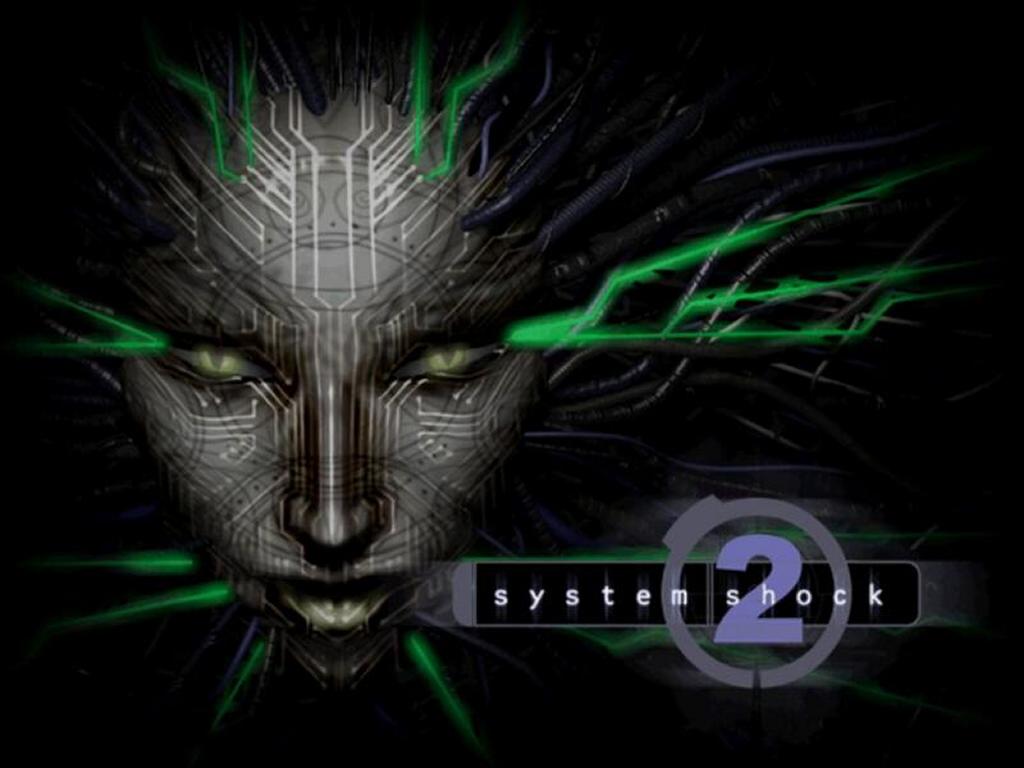
Yes those Looking Glass boys again but this time they flipped the idea of Thief on it's head. Rather than the maps being filled with baddies to avoid System Shock 2 filled the map with well... er nothing...
It's you, alone on a sodding great spaceship. Well you're not alone but the creatures are very few and far between. Looking Glass realised something that no other game seems to have twigged onto. Being alone is bloody scary!
If you've ever been in a very large space alone (say a shopping mall or a school after hours) you'll know what I'm getting at. It's freakin creepy...
Verdict Fear Type: Agoraphobia?
Bad Examples Of Fear Based Gaming
Resident Evil
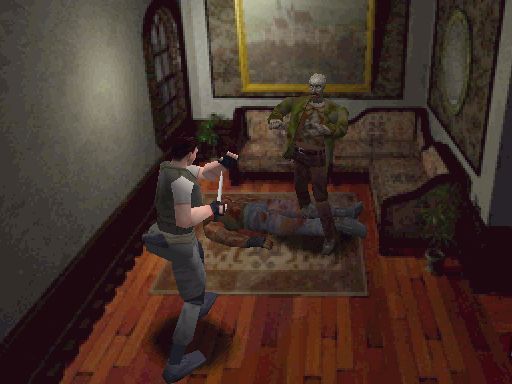
OK Resident Evil started the whole console survival horror genre but the execution was just plain annoying. It wasn't the environment or NPCs that created fear, it was the shitty camera and control system. In a moment of panic you could walk out of shot, change camera angle and end up running back towards the bad guy.
There is a lesson we can learn here, loss of control generates fear too!
Verdict Fear Type: Loss Of Control!
F.E.A.R

Having played through the original and the sequel I can honestly say that I didn't find it scary at all. The slow motion action was fun though!
F.E.A.R made a fatal mistake when implementing it's horror elements, it took control away from the player. Many of the flashbacks and clever screen elements that were supposed to mimic a modern horror simply didn't work because the player had no interaction with them. Once the flashback was over the game simply returned you to the same drab warehouse or whatever you were doing before. The actual maps themselves and gameplay did nothing to even make you hesitate when moving forward.
Verdict fear type: None at all!
So what have I learned from all this?
1: That if you want the player to experience fear the scares must happen around them while they are in control of the game.
2: That a constant threat of attack builds a great atmosphere in which fear can flourish
3: That knowing that something is coming for you and there's nothing you can do about it is damn scary.
4: That a creature that stalks you rather than attack is scarier than the attack itself.
5: That an empty open space with a hint of threat is scarier than a room full of creatures
6: That being hunted, for any creature is terrifying
What scares the hell out of you guys?
Friday, 8 July 2011
I am one with the darkness...
... a shadow, of a cat, in the night...
Torches are a pain in the ass.
You spend days of your life getting the lighting just right on your map and all the player has to do is hit the torch button and it's ruined.
Bastards!
Recently I've tried my hand at creating an almost pitch black level in order to creep the player out. The concept was pretty straightforward...
The player moves through a section of the level which is in total darkness. All the while creepy monsters move around them. Across pipes above, along walls adjacent to the player path, under floor grating.
The idea was to make the player feel surrounded by something they only caught glimpses of. I had the monsters (in this case the NPC_fastzombie from HL2) only move when the player performed an action like opening a door or jumping down onto a new ledge.
In practice however, I've found that total darkness is no fun at all. It puts the player under pressure but they quickly lose patience with the inability to see anything and the game play suffers greatly as unless the player is looking directly in the direction of an oncoming creature, they miss their entrance and end up just fumbling around in the dark.
So I added some lights, fairly minimal at first. You know what I found? Having just a few small lights is even more annoying!
Eventually I found the solution. Have alternating dark and light areas for the player to move through. Always give the player a light to go for in the distance. The light areas act as rest stops and relieve the pressure of being in total darkness.
I'm not saying that dark levels can't be fun, Valve proved it could be done well in HL2:Episode 1 but it requires a lot more skill to make it fun, than I thought it would require.
If you're interested in making a dark section for your valve based map I totally recommend you look into the env_flare entity. I pretty much does what it says on the tin. It's a flare, but it's very pretty, gives out minimal red light and can really add atmosphere to a map. Basically it creates a small island of light in a sea of darkness but the player feels totally isolated. Very cool!
env_flare

Torches are a pain in the ass.
You spend days of your life getting the lighting just right on your map and all the player has to do is hit the torch button and it's ruined.
Bastards!
Recently I've tried my hand at creating an almost pitch black level in order to creep the player out. The concept was pretty straightforward...
The player moves through a section of the level which is in total darkness. All the while creepy monsters move around them. Across pipes above, along walls adjacent to the player path, under floor grating.
The idea was to make the player feel surrounded by something they only caught glimpses of. I had the monsters (in this case the NPC_fastzombie from HL2) only move when the player performed an action like opening a door or jumping down onto a new ledge.
In practice however, I've found that total darkness is no fun at all. It puts the player under pressure but they quickly lose patience with the inability to see anything and the game play suffers greatly as unless the player is looking directly in the direction of an oncoming creature, they miss their entrance and end up just fumbling around in the dark.
So I added some lights, fairly minimal at first. You know what I found? Having just a few small lights is even more annoying!
Eventually I found the solution. Have alternating dark and light areas for the player to move through. Always give the player a light to go for in the distance. The light areas act as rest stops and relieve the pressure of being in total darkness.
I'm not saying that dark levels can't be fun, Valve proved it could be done well in HL2:Episode 1 but it requires a lot more skill to make it fun, than I thought it would require.
If you're interested in making a dark section for your valve based map I totally recommend you look into the env_flare entity. I pretty much does what it says on the tin. It's a flare, but it's very pretty, gives out minimal red light and can really add atmosphere to a map. Basically it creates a small island of light in a sea of darkness but the player feels totally isolated. Very cool!
env_flare

Monday, 4 July 2011
The Trouble With "Real"
On many forums I visit I see loads of feedback on gameplay in maps with comments similar to the one below...
"That's not very realistic!"
As a mapper I'm very careful when I receive this kind of feedback because you see... we're not building a representation of the Real here are we?
Players who make these comments about the Real need to stop and think about the games they've been playing.
I've yet to play a game that accurately represents reality. If I did obtain a game that attempted to re-create reality I've no doubt it would be dull as shit. Real is dull. That's why we play games to escape the drudge of the real.
I think when players say that something is not realistic I think they're actually saying "you haven't done a good enough job getting me used to this idea".
With the right level of introduction and explanation, the player will engage with anything.
As an example take the film The Matrix.
At the beginning we see Trinity pull off some Matrix type moves, running on walls etc. We're wowed by the visuals and the action. The film then spends the next hour, pretty much on exposition to answer the question "What is the Matrix?". Every element is carefully set up, including acres of exposition from poor Laurence Fishbourne, and all of it is put in place so that when the action kicks off, the audience are totally bought in to the world and the plausibility of what takes place.
I can bend or break the game reality as much as I like as long as I take the player by the hand and lead them through it.
Reality does have its uses though.
On a micro level there is a place for reality in my maps. A certain type of light, say for example a bedside lamp, should give off a realistic light. Attention to these details when detailing your map, does have an effect on gameplay. It sells the new reality I've created. Because the little things are as they should be the new gameplay elements are more acceptable. They're taking place in an environment the player can instantly connect with.
So in conclusion, we find that there is a balance to be struck between Real and Unreal. Unreal elements will be accepted if introduced carefully and the Real elements help the player accept the Unreal.
"That's not very realistic!"
As a mapper I'm very careful when I receive this kind of feedback because you see... we're not building a representation of the Real here are we?
Players who make these comments about the Real need to stop and think about the games they've been playing.
I've yet to play a game that accurately represents reality. If I did obtain a game that attempted to re-create reality I've no doubt it would be dull as shit. Real is dull. That's why we play games to escape the drudge of the real.
I think when players say that something is not realistic I think they're actually saying "you haven't done a good enough job getting me used to this idea".
With the right level of introduction and explanation, the player will engage with anything.
As an example take the film The Matrix.
At the beginning we see Trinity pull off some Matrix type moves, running on walls etc. We're wowed by the visuals and the action. The film then spends the next hour, pretty much on exposition to answer the question "What is the Matrix?". Every element is carefully set up, including acres of exposition from poor Laurence Fishbourne, and all of it is put in place so that when the action kicks off, the audience are totally bought in to the world and the plausibility of what takes place.
I can bend or break the game reality as much as I like as long as I take the player by the hand and lead them through it.
Reality does have its uses though.
On a micro level there is a place for reality in my maps. A certain type of light, say for example a bedside lamp, should give off a realistic light. Attention to these details when detailing your map, does have an effect on gameplay. It sells the new reality I've created. Because the little things are as they should be the new gameplay elements are more acceptable. They're taking place in an environment the player can instantly connect with.
So in conclusion, we find that there is a balance to be struck between Real and Unreal. Unreal elements will be accepted if introduced carefully and the Real elements help the player accept the Unreal.
Friday, 1 July 2011
Weapon Progression
In many custom HL2 maps I've played the authors add an element of weapon progression from Crobar through to Rocket Launcher. In smaller maps these weapons are delivered to the player thick and fast so by about 4 mins into the map they're fully kitted out with a complete arsenal.
It seems to me though, that unless weapon progression is going to serve the gameplay, you might as well avoid it completely and simply give the player all the weapons at the start of the map.
Here's some thoughts on the various functions weapon progression can serve.
That Good Ole Feeling..
Each weapon has a certain feel to it. This can really help when trying to convey a feeling across to the player.
Taking HL2 weaponry as an example... if you want the feeling of motion and swift firefights then the SMG, grenades and AR2 are probably you're best options.
If you want the player to feel powerful then the Shotgun and Magnum and Grav Gun are probably good choices.
For a more considered and slow approach the Pistol and Crossbow should fit the bill.
And for all out destruction, even at targets on the ground, the Rocket Launcher is the daddy but it's slow to reload don't forget so the player is left a little vunerable.

Weapon Absence
I would argue that not having the right weapon or not having a weapon at all makes for some pretty interesting gameplay.
Players aren't used to running away from the bad guys. It takes a hell of a lot of coersion to make them. The players natural reaction to an enemy is to attack. That's what games have been teaching players to do for years.
At the beginning of HL2 when Gordon was on the run, it takes about 5 NPCs all telling you to run away just to convince the player to do so.
I've been dying to put together a map where the main aim is to outrun the bad guys. To make it through some crazy assault course with the bad guys chasing you all the way.
One day I'll crack it...
Also, by denying the player a gun I force them to think creatively. A situation that could be resolved swiftly with a few shotgun shells becomes a mad scramble to stay alive using other methods provided to the player by the mapper.
No Gun Just Run!!!! Point Insertion From HL2

The Right Tool For The Right Job
Its often the case that the player is given the weapon that is most effective against a particular NPC just before they meet them in the map. I often think this is a bit of a wasted opportunity and comes across as quite contrived.
Surely it's more challenging and more fun to have the player meet that NPC before they find the appropriate weapon? Make them fight hard to reach the weapon that will make their lives easier.
A great example of this is the Surface Tension map for HL1. The player spend lots of time running away from the Apache chopper then finally get rewarded with the weapon they need to take it down. The victory is very sweet indeed when it comes...
Alternatively, I can make that weapon the objective of an area. The player can see the weapon they need but just can't get to it without a fight or puzzle with the tricky NPC hassling them every step of the way.
Too easy or too hard?
A major consideration on weapon progression is how a particular weapon will affect future encounters later in the map. What weapons will the player have in their arsenal at that time. Later NPC encounters in my map need to be much more dynamic as to how the player can assault the enemy. If they have a long range weapon at the time it gives the player more choice as to the style of the assault. My map has to provide cover for sniping positions.
I can also manage weapon usage through the provision of ammo but that's not a certain method to ensure the player wont have access to that weapon at any time. Some players enjoy being frugal with their bullets.
Weapon Stripping
Sometimes, in order to justify a certain type of action, removing all the players weapons is necessary. I would be very careful with this though. I mustn't forget that the player worked really hard to get the weapons in the first place. It seems very mean to take them away and the player could hate me for it.
Also, working in a plausible reason why all they're weapons are being taken can be tough.
The most obvious is a capture scenario. The player is thrown in jail and has to escape and reclaim all their weapons. This is very cliched though and I'm sure we can can come up with something a little more interesting.
Weapon delivery and weapon gates
Creating various ways of delivering weapons to the player can also be a little difficult. I don't want my player to miss a weapon pick up, so I need to find a way to make sure they actually have picked up the weapon they need.
I covered weapon gates in my earlier post so I wont go back into the idea but if at all possible I must make sure that the player picked up the weapon before they proceed. A nice way is to place it in a tight doorway or crawl space where the player cant miss it.
I could also use an NPC gate where the NPC wont open the way forward for the player until the weapon is picked up.
In addition I would say that I try to make the placement of the weapon pick up as logical as possible.
Simply having a loaded shotgun lying on the floor in the middle of a hallway doesn't sit well with me.
I mean some kid could just come along and pick it up!!!
I try to place weapons next to dead soldiers, on tables with NPCs near by, or on a weapon rack in a secure room. I try to make the weapon pick up placement fit and blend with the environment as much as possible while still being obvious to the player.
Hope this was an interesting read.
It seems to me though, that unless weapon progression is going to serve the gameplay, you might as well avoid it completely and simply give the player all the weapons at the start of the map.
Here's some thoughts on the various functions weapon progression can serve.
That Good Ole Feeling..
Each weapon has a certain feel to it. This can really help when trying to convey a feeling across to the player.
Taking HL2 weaponry as an example... if you want the feeling of motion and swift firefights then the SMG, grenades and AR2 are probably you're best options.
If you want the player to feel powerful then the Shotgun and Magnum and Grav Gun are probably good choices.
For a more considered and slow approach the Pistol and Crossbow should fit the bill.
And for all out destruction, even at targets on the ground, the Rocket Launcher is the daddy but it's slow to reload don't forget so the player is left a little vunerable.

Weapon Absence
I would argue that not having the right weapon or not having a weapon at all makes for some pretty interesting gameplay.
Players aren't used to running away from the bad guys. It takes a hell of a lot of coersion to make them. The players natural reaction to an enemy is to attack. That's what games have been teaching players to do for years.
At the beginning of HL2 when Gordon was on the run, it takes about 5 NPCs all telling you to run away just to convince the player to do so.
I've been dying to put together a map where the main aim is to outrun the bad guys. To make it through some crazy assault course with the bad guys chasing you all the way.
One day I'll crack it...
Also, by denying the player a gun I force them to think creatively. A situation that could be resolved swiftly with a few shotgun shells becomes a mad scramble to stay alive using other methods provided to the player by the mapper.
No Gun Just Run!!!! Point Insertion From HL2
The Right Tool For The Right Job
Its often the case that the player is given the weapon that is most effective against a particular NPC just before they meet them in the map. I often think this is a bit of a wasted opportunity and comes across as quite contrived.
Surely it's more challenging and more fun to have the player meet that NPC before they find the appropriate weapon? Make them fight hard to reach the weapon that will make their lives easier.
A great example of this is the Surface Tension map for HL1. The player spend lots of time running away from the Apache chopper then finally get rewarded with the weapon they need to take it down. The victory is very sweet indeed when it comes...
Alternatively, I can make that weapon the objective of an area. The player can see the weapon they need but just can't get to it without a fight or puzzle with the tricky NPC hassling them every step of the way.
Too easy or too hard?
A major consideration on weapon progression is how a particular weapon will affect future encounters later in the map. What weapons will the player have in their arsenal at that time. Later NPC encounters in my map need to be much more dynamic as to how the player can assault the enemy. If they have a long range weapon at the time it gives the player more choice as to the style of the assault. My map has to provide cover for sniping positions.
I can also manage weapon usage through the provision of ammo but that's not a certain method to ensure the player wont have access to that weapon at any time. Some players enjoy being frugal with their bullets.
Weapon Stripping
Sometimes, in order to justify a certain type of action, removing all the players weapons is necessary. I would be very careful with this though. I mustn't forget that the player worked really hard to get the weapons in the first place. It seems very mean to take them away and the player could hate me for it.
Also, working in a plausible reason why all they're weapons are being taken can be tough.
The most obvious is a capture scenario. The player is thrown in jail and has to escape and reclaim all their weapons. This is very cliched though and I'm sure we can can come up with something a little more interesting.
Weapon delivery and weapon gates
Creating various ways of delivering weapons to the player can also be a little difficult. I don't want my player to miss a weapon pick up, so I need to find a way to make sure they actually have picked up the weapon they need.
I covered weapon gates in my earlier post so I wont go back into the idea but if at all possible I must make sure that the player picked up the weapon before they proceed. A nice way is to place it in a tight doorway or crawl space where the player cant miss it.
I could also use an NPC gate where the NPC wont open the way forward for the player until the weapon is picked up.
In addition I would say that I try to make the placement of the weapon pick up as logical as possible.
Simply having a loaded shotgun lying on the floor in the middle of a hallway doesn't sit well with me.
I mean some kid could just come along and pick it up!!!
I try to place weapons next to dead soldiers, on tables with NPCs near by, or on a weapon rack in a secure room. I try to make the weapon pick up placement fit and blend with the environment as much as possible while still being obvious to the player.
Hope this was an interesting read.
Tuesday, 28 June 2011
What does the player want?
It's not hard... they want financial security and a warm dry place to live, with enough food to eat and the love and support from their families and partners...
In terms of gaming experiences however that's a whole different ball game.
With certain caveats, the following sentance is true.
PLAYERS DON'T KNOW WHAT THEY WANT......UNTIL IT IS GIVEN TO THEM!
I honestly believe the above sentence is true..
HOWEVER..
This applies to new types of gameplay. It is not true about environment design.
If I am mapping for a specific game, the player comes to my map with a specific set of expectations. These expectations were set when they played the official game.
They expect a reasonable level of mapping capability so that the map I create looks reasonably like that which I am purporting it to be.
If I tell the player that my map is set in some docks, my map should look pretty much like a docking area, with boats, jettys etc.. and plenty of the details filled in.
If I just throw a blockmap together with a few water brushes and some boat models it's very hard for the player to suspend their disbelief and get into the zone.
The Visual Dictionary
In games such as Portal and Half Life 2, a visual dictionary has been built by the player as they interacted with the game.
For example... in Half-Life 2 a red metal barrel is explosive.
This is understood by anyone who's played Half-Life 2. Through playing the game they have built up a set of expectations about how the game world works.
If I decide I'm going to make the red metal barrels er... unexplosive (?) then I first need to let the player know that in my map the visual dictionary has been altered.
So how do I do that...?
Player Training
Training the player in a new form of gameplay is a slightly laborious process, but it can also be very fun for the player and you can work it seemlessly into your map.
First I introduce the player to the idea, normally through an NPC telling the player about that idea (you could use screen text if you're feeling lazy) or through a demonstration that the player can watch and learn (think, NPC walks into trap before you get to it).
Then I ask the player to solve a puzzle using the new form of gameplay in a safe environment where they can take their time and learn at their own pace.
I may want them to repeat the action several times just to be sure they understand it.
Then finally I am ready to introduce the player to the idea under pressure, i.e. during a firefight.
I have learned that it is really infuriating for players if you try to introduce an idea in a moment of action. The player doesn't have time to absorb the information or learn anything at such times. They are simply concentrating on the cross hairs under their noses.
Progress is reward
The thing the player wants the most is to progress forward through you're map. The goal don't forget is to complete the experience, so to move forward is to get closer to that goal. The challenge is to throw enough barriers in the way of them moving forward for it to be enjoyable but not too many that it becomes annoying.
I remember playing Final Fantasy 7 on the Playstation and yelling at the screen every time I was trying to travel across the world and got sucked into a fight. There's a lesson to be learned here in my opinion. Barriers to progress should be varied and interesting.
What are the chances of me getting to the cave without a sodding fight?

The constant interruptions to my progress in FF7, in the same format, and the same stupid sound effect (anyone who knows the FF games will know that dreaded sound) just grew too annoying.
I never finished it by the way.
In terms of gaming experiences however that's a whole different ball game.
With certain caveats, the following sentance is true.
PLAYERS DON'T KNOW WHAT THEY WANT......UNTIL IT IS GIVEN TO THEM!
I honestly believe the above sentence is true..
HOWEVER..
This applies to new types of gameplay. It is not true about environment design.
If I am mapping for a specific game, the player comes to my map with a specific set of expectations. These expectations were set when they played the official game.
They expect a reasonable level of mapping capability so that the map I create looks reasonably like that which I am purporting it to be.
If I tell the player that my map is set in some docks, my map should look pretty much like a docking area, with boats, jettys etc.. and plenty of the details filled in.
If I just throw a blockmap together with a few water brushes and some boat models it's very hard for the player to suspend their disbelief and get into the zone.
The Visual Dictionary
In games such as Portal and Half Life 2, a visual dictionary has been built by the player as they interacted with the game.
For example... in Half-Life 2 a red metal barrel is explosive.
This is understood by anyone who's played Half-Life 2. Through playing the game they have built up a set of expectations about how the game world works.
If I decide I'm going to make the red metal barrels er... unexplosive (?) then I first need to let the player know that in my map the visual dictionary has been altered.
So how do I do that...?
Player Training
Training the player in a new form of gameplay is a slightly laborious process, but it can also be very fun for the player and you can work it seemlessly into your map.
First I introduce the player to the idea, normally through an NPC telling the player about that idea (you could use screen text if you're feeling lazy) or through a demonstration that the player can watch and learn (think, NPC walks into trap before you get to it).
Then I ask the player to solve a puzzle using the new form of gameplay in a safe environment where they can take their time and learn at their own pace.
I may want them to repeat the action several times just to be sure they understand it.
Then finally I am ready to introduce the player to the idea under pressure, i.e. during a firefight.
I have learned that it is really infuriating for players if you try to introduce an idea in a moment of action. The player doesn't have time to absorb the information or learn anything at such times. They are simply concentrating on the cross hairs under their noses.
Progress is reward
The thing the player wants the most is to progress forward through you're map. The goal don't forget is to complete the experience, so to move forward is to get closer to that goal. The challenge is to throw enough barriers in the way of them moving forward for it to be enjoyable but not too many that it becomes annoying.
I remember playing Final Fantasy 7 on the Playstation and yelling at the screen every time I was trying to travel across the world and got sucked into a fight. There's a lesson to be learned here in my opinion. Barriers to progress should be varied and interesting.
What are the chances of me getting to the cave without a sodding fight?
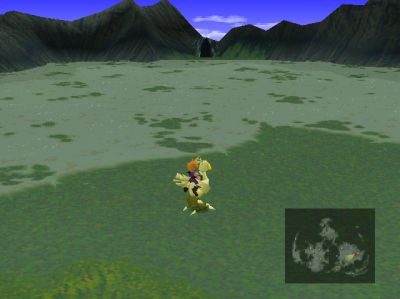
The constant interruptions to my progress in FF7, in the same format, and the same stupid sound effect (anyone who knows the FF games will know that dreaded sound) just grew too annoying.
I never finished it by the way.
Thursday, 23 June 2011
Gating player progress
Player gating is a term that is used to describe the various methods of halting a players progress through a map.
Without them players could charge through every encounter like an 8 year old in a particularly boring museum.
Player gating can be a seriously frustrating business. How do I make sure the player kills all the bad guys before the move on?
Its a simple enough problem however trying to make the reasons for player gating plausible to the game world can be a real problem. Heres some of the various methods Ive seen used.
The Puzzle Gate
The simplest form of gate. Solve the puzzle to access the exit.
Think about the breezeblock seesaw puzzle near the beginning of HL2.

The Weapon Gate
The player must obtain a new weapon in order to break through a barrier.
This is a great way to ensure the player doesnt skip a new weapon that they will need later in the map.
HL2:EP1 Pistol Weapon Gate

The NPC Break In Gate
Once the action has finished in the area, a previously blocked route is unblocked by a new enemy NPC being introduced, normally by smashing or blasting through the door.
The slightly overused combine door lock blasts in HL2:EP1 are ax good example of this. The nice tuing about this method is that it keeps the action going.
HL2:EP1 Break In Gate

The Slow Mover Gate
The player activates the gate opening mechanism but it take a very long time for the gate to open. While waiting the player normally has to deal with a slew of enemies and survive long enough to escape.
This is seen over and over again in the Left 4 Dead games and suits the play style well. The other typical scanario is activativing THE SLOWEST LIFT IN THE WORLD!
The crane scene in the Left 4 Dead: Dead Air campaign is a great example of a slow mover gate...

The only downside for SP is that its a timed event, which means that the player can escape without clearing out all the enemies.. thats probably mostly OK though.
The Death Throw Gate
As an enemy dies it's last actions are scripted and open up a new route for the player.
This one is tough to pull off because the NPC once defeated has to perform a number of scripted actions before they finally shuffle off the mortal coil. It stretches the imagination a little but can be more plausible for flying enemies or really big boss npcs that can fall in a certain direction to smash through a wall or something.
Mate Opens Gate
A friendly NPC appears and opens the route forward for you. This will require NPC scripting and can be fun if its done well but its not my preference. The less help the player gets from NPCs the better in my opinion.
Examples of this are prolific in HL2 with Alex hacking combine terminals over and over again.
The Eye Candy Gate
A jaw dropping moment for the player to watch and enjoy that open up a new route for the player. Think the plane crash in the L4D Dead Air campaign. Will take you ages to build but may be well worth it as you know the player will be fully focussed on all your hard work.
The Astounding Dead Air Plane Crash

Let me know if I have missed any methods... or if youve seen any other really cool ways to gate the player.
Falling Into Player Gating Traps
Heres a good example of how a mapper can fall into a player gating trap.
In my map Ep2_aquaduct_4-5 the whole sequence of events begins with the player turning a valve to make water rise in order for them to reach the first level of the chamber.
In order to add some necessary action to the early part of the map I had a nice firefight going on with combine on the higher levels of the chamber shooting down onto the player.
I dont want to lose that but how can I prevent the player from turning the valve and making the water rise before the attacking combine are dead.
I tried having the water rise anyway but the combination of the player having to swim whilst being fired upon was too annoying for playtesters and just wasnt any fun.
In the end I had to settle for a rather unrealistic approach. The combine dont attack until the player turns the valve (at which point the sound of rushing water can be heard) but the water level doesnt rise until the combine are all dead.
You could explain this away as it simply took that long for the water to rise but playtesters also commented that it seemed to take forever for the water level to begin rising...
I can think of no other way that the death of the combine could realistically provide access to the valve..
Heres a link to the map if you want to see for yourself how this works...
Here's the link: http://www.mediafire.com/file/uuszylzw6nfqdzs/ep2_aquaduct-4_5.bsp
Without them players could charge through every encounter like an 8 year old in a particularly boring museum.
Player gating can be a seriously frustrating business. How do I make sure the player kills all the bad guys before the move on?
Its a simple enough problem however trying to make the reasons for player gating plausible to the game world can be a real problem. Heres some of the various methods Ive seen used.
The Puzzle Gate
The simplest form of gate. Solve the puzzle to access the exit.
Think about the breezeblock seesaw puzzle near the beginning of HL2.

The Weapon Gate
The player must obtain a new weapon in order to break through a barrier.
This is a great way to ensure the player doesnt skip a new weapon that they will need later in the map.
HL2:EP1 Pistol Weapon Gate

The NPC Break In Gate
Once the action has finished in the area, a previously blocked route is unblocked by a new enemy NPC being introduced, normally by smashing or blasting through the door.
The slightly overused combine door lock blasts in HL2:EP1 are ax good example of this. The nice tuing about this method is that it keeps the action going.
HL2:EP1 Break In Gate

The Slow Mover Gate
The player activates the gate opening mechanism but it take a very long time for the gate to open. While waiting the player normally has to deal with a slew of enemies and survive long enough to escape.
This is seen over and over again in the Left 4 Dead games and suits the play style well. The other typical scanario is activativing THE SLOWEST LIFT IN THE WORLD!
The crane scene in the Left 4 Dead: Dead Air campaign is a great example of a slow mover gate...
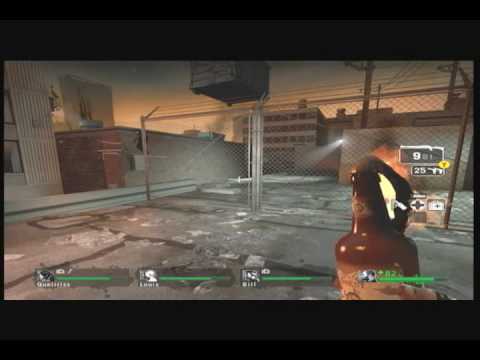
The only downside for SP is that its a timed event, which means that the player can escape without clearing out all the enemies.. thats probably mostly OK though.
The Death Throw Gate
As an enemy dies it's last actions are scripted and open up a new route for the player.
This one is tough to pull off because the NPC once defeated has to perform a number of scripted actions before they finally shuffle off the mortal coil. It stretches the imagination a little but can be more plausible for flying enemies or really big boss npcs that can fall in a certain direction to smash through a wall or something.
Mate Opens Gate
A friendly NPC appears and opens the route forward for you. This will require NPC scripting and can be fun if its done well but its not my preference. The less help the player gets from NPCs the better in my opinion.
Examples of this are prolific in HL2 with Alex hacking combine terminals over and over again.
The Eye Candy Gate
A jaw dropping moment for the player to watch and enjoy that open up a new route for the player. Think the plane crash in the L4D Dead Air campaign. Will take you ages to build but may be well worth it as you know the player will be fully focussed on all your hard work.
The Astounding Dead Air Plane Crash

Let me know if I have missed any methods... or if youve seen any other really cool ways to gate the player.
Falling Into Player Gating Traps
Heres a good example of how a mapper can fall into a player gating trap.
In my map Ep2_aquaduct_4-5 the whole sequence of events begins with the player turning a valve to make water rise in order for them to reach the first level of the chamber.
In order to add some necessary action to the early part of the map I had a nice firefight going on with combine on the higher levels of the chamber shooting down onto the player.
I dont want to lose that but how can I prevent the player from turning the valve and making the water rise before the attacking combine are dead.
I tried having the water rise anyway but the combination of the player having to swim whilst being fired upon was too annoying for playtesters and just wasnt any fun.
In the end I had to settle for a rather unrealistic approach. The combine dont attack until the player turns the valve (at which point the sound of rushing water can be heard) but the water level doesnt rise until the combine are all dead.
You could explain this away as it simply took that long for the water to rise but playtesters also commented that it seemed to take forever for the water level to begin rising...
I can think of no other way that the death of the combine could realistically provide access to the valve..
Heres a link to the map if you want to see for yourself how this works...
Here's the link: http://www.mediafire.com/file/uuszylzw6nfqdzs/ep2_aquaduct-4_5.bsp
Wednesday, 22 June 2011
A Feeling must be earned...
I base my maps on how I want the player to feel. I have ideas of huge revelations to the player, moment of intense emotions like fear, elation, power, revulsion, relief etc...
While I may never manage to actually get a player to feel these intense emotions I think if you aim for them youre on the right track.
What I've learned is that these feelings cant be achieved through quick scenarios, they must be earned through the map sections prior to that moment.
A stressed out player (who is having fun being stressed, hopefully) is much more likely to succumb to these feelings.
If your map is too easy, the player never feels in danger and therefore never emotionally invests in the game experience.
Bottom line... Im learning why all those twists and turns along the way are so necessary... its all about building up to these big moments.
While I may never manage to actually get a player to feel these intense emotions I think if you aim for them youre on the right track.
What I've learned is that these feelings cant be achieved through quick scenarios, they must be earned through the map sections prior to that moment.
A stressed out player (who is having fun being stressed, hopefully) is much more likely to succumb to these feelings.
If your map is too easy, the player never feels in danger and therefore never emotionally invests in the game experience.
Bottom line... Im learning why all those twists and turns along the way are so necessary... its all about building up to these big moments.
Subscribe to:
Posts (Atom)