Monday, 11 July 2011

Fear

"Feel terror cloud your senses, feel its power to distort and know that this power can be yours!" Ras Al Gul, Batman Begins

Manufacturing fear isn't like it used to be. These days it's all about the cheap thrill. The schlocky gross out scenes or long drawn out torture porn movies. Take me back to the days of good old fashioned scares. A better word is creeps...

I've heard friends say that fear is a very personal thing. That what scares one person won't necessarily scare another. I disagree...

Somethings are universally scary and with the right timing and atmosphere you can put anyone on the edge of their seat.

Lets look at some great examples of game based fear.

Left 4 Dead


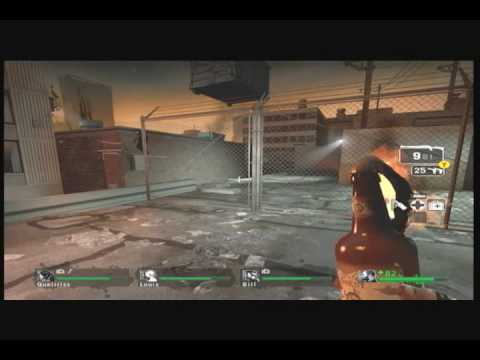
For all its Romero homage gore based gaming, Left 4 Dead does have a key element of fear to it. The tension is generated by the ever present threat of a zombie rush at any time. The games randomness of zombie spawning thanks to the built in Director gives the players really no place to hide because a rush could come at any time.
I'm sure that many folks who have played Left 4 Dead over and over have become numb to its scary charms but if you recall your first campaign ya gotta admit you were shitting it!

Verdict Fear Type: Fear Of Randomness

Thief 2: The Metal Age


Creeping about hoping to god you don't get discovered by guards is pretty nervewracking stuff at the best of times. When you replace the guard with a steam driven robot that fires deadly cannonballs but talks in a creepy Droopy style mechanical voice you're pretty much hitting the fear button dead on. Even better is a whispering corpse with a sodding great mallet!
Thief took a basic premise "don't get caught" and simply upped the stakes of what might catch you and what they'll do to you when they do. Nice...

Verdict Fear Type: Fear Of Discovery

System Shock 2
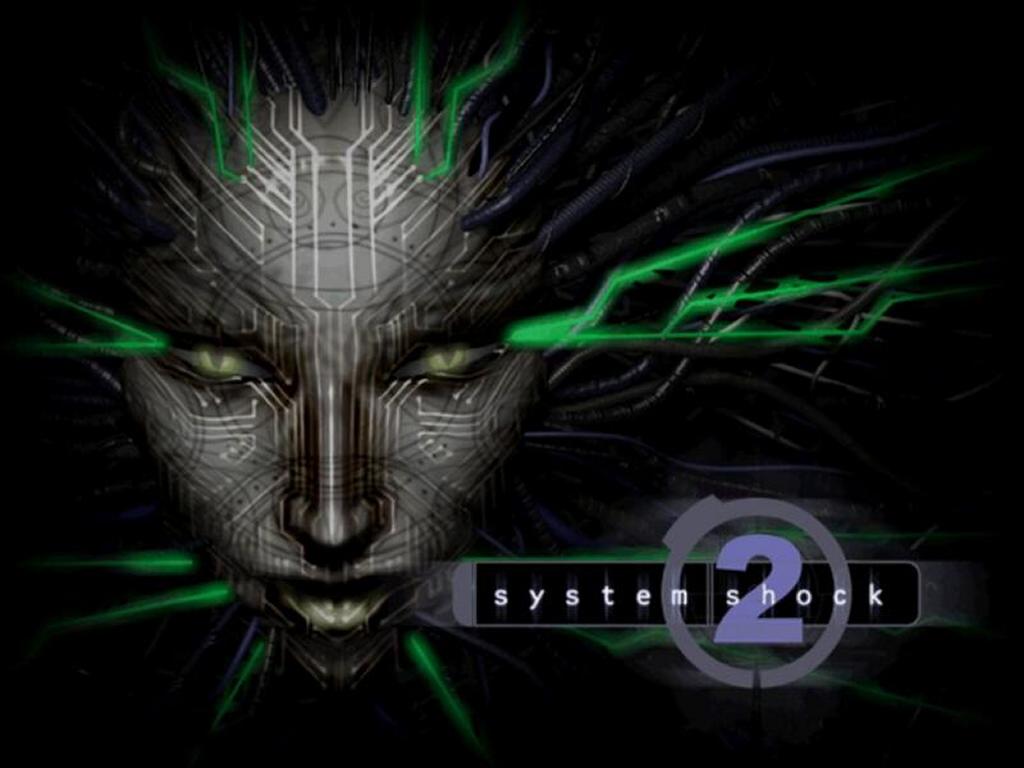


Yes those Looking Glass boys again but this time they flipped the idea of Thief on it's head. Rather than the maps being filled with baddies to avoid System Shock 2 filled the map with well... er nothing...

It's you, alone on a sodding great spaceship. Well you're not alone but the creatures are very few and far between. Looking Glass realised something that no other game seems to have twigged onto. Being alone is bloody scary!
If you've ever been in a very large space alone (say a shopping mall or a school after hours) you'll know what I'm getting at. It's freakin creepy...

Verdict Fear Type: Agoraphobia?

Bad Examples Of Fear Based Gaming

Resident Evil
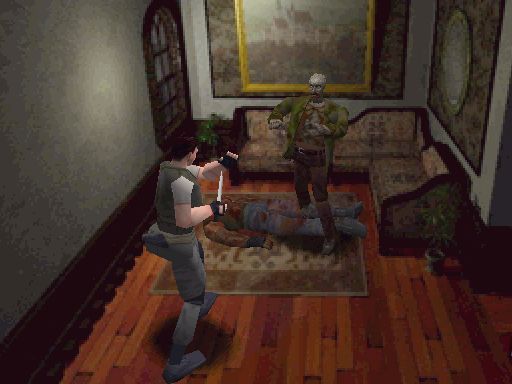


OK Resident Evil started the whole console survival horror genre but the execution was just plain annoying. It wasn't the environment or NPCs that created fear, it was the shitty camera and control system. In a moment of panic you could walk out of shot, change camera angle and end up running back towards the bad guy.
There is a lesson we can learn here, loss of control generates fear too!

Verdict Fear Type: Loss Of Control!

F.E.A.R


Having played through the original and the sequel I can honestly say that I didn't find it scary at all. The slow motion action was fun though!
F.E.A.R made a fatal mistake when implementing it's horror elements, it took control away from the player. Many of the flashbacks and clever screen elements that were supposed to mimic a modern horror simply didn't work because the player had no interaction with them. Once the flashback was over the game simply returned you to the same drab warehouse or whatever you were doing before. The actual maps themselves and gameplay did nothing to even make you hesitate when moving forward.

Verdict fear type: None at all!


So what have I learned from all this?

1: That if you want the player to experience fear the scares must happen around them while they are in control of the game.

2: That a constant threat of attack builds a great atmosphere in which fear can flourish

3: That knowing that something is coming for you and there's nothing you can do about it is damn scary.

4: That a creature that stalks you rather than attack is scarier than the attack itself.

5: That an empty open space with a hint of threat is scarier than a room full of creatures

6: That being hunted, for any creature is terrifying

What scares the hell out of you guys?

Friday, 8 July 2011

I am one with the darkness...

... a shadow, of a cat, in the night...

Torches are a pain in the ass.

You spend days of your life getting the lighting just right on your map and all the player has to do is hit the torch button and it's ruined.

Bastards!

Recently I've tried my hand at creating an almost pitch black level in order to creep the player out. The concept was pretty straightforward...

The player moves through a section of the level which is in total darkness. All the while creepy monsters move around them. Across pipes above, along walls adjacent to the player path, under floor grating.

The idea was to make the player feel surrounded by something they only caught glimpses of. I had the monsters (in this case the NPC_fastzombie from HL2) only move when the player performed an action like opening a door or jumping down onto a new ledge.

In practice however, I've found that total darkness is no fun at all. It puts the player under pressure but they quickly lose patience with the inability to see anything and the game play suffers greatly as unless the player is looking directly in the direction of an oncoming creature, they miss their entrance and end up just fumbling around in the dark.

So I added some lights, fairly minimal at first. You know what I found? Having just a few small lights is even more annoying!

Eventually I found the solution. Have alternating dark and light areas for the player to move through. Always give the player a light to go for in the distance. The light areas act as rest stops and relieve the pressure of being in total darkness.

I'm not saying that dark levels can't be fun, Valve proved it could be done well in HL2:Episode 1 but it requires a lot more skill to make it fun, than I thought it would require.

If you're interested in making a dark section for your valve based map I totally recommend you look into the env_flare entity. I pretty much does what it says on the tin. It's a flare, but it's very pretty, gives out minimal red light and can really add atmosphere to a map. Basically it creates a small island of light in a sea of darkness but the player feels totally isolated. Very cool!

env_flare

Monday, 4 July 2011

The Trouble With "Real"

On many forums I visit I see loads of feedback on gameplay in maps with comments similar to the one below...

"That's not very realistic!"

As a mapper I'm very careful when I receive this kind of feedback because you see... we're not building a representation of the Real here are we?

Players who make these comments about the Real need to stop and think about the games they've been playing.

I've yet to play a game that accurately represents reality. If I did obtain a game that attempted to re-create reality I've no doubt it would be dull as shit. Real is dull. That's why we play games to escape the drudge of the real.

I think when players say that something is not realistic I think they're actually saying "you haven't done a good enough job getting me used to this idea".

With the right level of introduction and explanation, the player will engage with anything.

As an example take the film The Matrix.

At the beginning we see Trinity pull off some Matrix type moves, running on walls etc. We're wowed by the visuals and the action. The film then spends the next hour, pretty much on exposition to answer the question "What is the Matrix?". Every element is carefully set up, including acres of exposition from poor Laurence Fishbourne, and all of it is put in place so that when the action kicks off, the audience are totally bought in to the world and the plausibility of what takes place.

I can bend or break the game reality as much as I like as long as I take the player by the hand and lead them through it.

Reality does have its uses though.
On a micro level there is a place for reality in my maps. A certain type of light, say for example a bedside lamp, should give off a realistic light. Attention to these details when detailing your map, does have an effect on gameplay. It sells the new reality I've created. Because the little things are as they should be the new gameplay elements are more acceptable. They're taking place in an environment the player can instantly connect with.

So in conclusion, we find that there is a balance to be struck between Real and Unreal. Unreal elements will be accepted if introduced carefully and the Real elements help the player accept the Unreal.

Friday, 1 July 2011

Weapon Progression

In many custom HL2 maps I've played the authors add an element of weapon progression from Crobar through to Rocket Launcher. In smaller maps these weapons are delivered to the player thick and fast so by about 4 mins into the map they're fully kitted out with a complete arsenal.

It seems to me though, that unless weapon progression is going to serve the gameplay, you might as well avoid it completely and simply give the player all the weapons at the start of the map.

Here's some thoughts on the various functions weapon progression can serve.

That Good Ole Feeling..

Each weapon has a certain feel to it. This can really help when trying to convey a feeling across to the player.

Taking HL2 weaponry as an example... if you want the feeling of motion and swift firefights then the SMG, grenades and AR2 are probably you're best options.

If you want the player to feel powerful then the Shotgun and Magnum and Grav Gun are probably good choices.

For a more considered and slow approach the Pistol and Crossbow should fit the bill.

And for all out destruction, even at targets on the ground, the Rocket Launcher is the daddy but it's slow to reload don't forget so the player is left a little vunerable.


Weapon Absence

I would argue that not having the right weapon or not having a weapon at all makes for some pretty interesting gameplay.
Players aren't used to running away from the bad guys. It takes a hell of a lot of coersion to make them. The players natural reaction to an enemy is to attack. That's what games have been teaching players to do for years.
At the beginning of HL2 when Gordon was on the run, it takes about 5 NPCs all telling you to run away just to convince the player to do so.
I've been dying to put together a map where the main aim is to outrun the bad guys. To make it through some crazy assault course with the bad guys chasing you all the way.
One day I'll crack it...

Also, by denying the player a gun I force them to think creatively. A situation that could be resolved swiftly with a few shotgun shells becomes a mad scramble to stay alive using other methods provided to the player by the mapper.

No Gun Just Run!!!! Point Insertion From HL2


The Right Tool For The Right Job

Its often the case that the player is given the weapon that is most effective against a particular NPC just before they meet them in the map. I often think this is a bit of a wasted opportunity and comes across as quite contrived.
Surely it's more challenging and more fun to have the player meet that NPC before they find the appropriate weapon? Make them fight hard to reach the weapon that will make their lives easier.

A great example of this is the Surface Tension map for HL1. The player spend lots of time running away from the Apache chopper then finally get rewarded with the weapon they need to take it down. The victory is very sweet indeed when it comes...

Alternatively, I can make that weapon the objective of an area. The player can see the weapon they need but just can't get to it without a fight or puzzle with the tricky NPC hassling them every step of the way.

Too easy or too hard?

A major consideration on weapon progression is how a particular weapon will affect future encounters later in the map. What weapons will the player have in their arsenal at that time. Later NPC encounters in my map need to be much more dynamic as to how the player can assault the enemy. If they have a long range weapon at the time it gives the player more choice as to the style of the assault. My map has to provide cover for sniping positions.

I can also manage weapon usage through the provision of ammo but that's not a certain method to ensure the player wont have access to that weapon at any time. Some players enjoy being frugal with their bullets.

Weapon Stripping

Sometimes, in order to justify a certain type of action, removing all the players weapons is necessary. I would be very careful with this though. I mustn't forget that the player worked really hard to get the weapons in the first place. It seems very mean to take them away and the player could hate me for it.

Also, working in a plausible reason why all they're weapons are being taken can be tough.
The most obvious is a capture scenario. The player is thrown in jail and has to escape and reclaim all their weapons. This is very cliched though and I'm sure we can can come up with something a little more interesting.

Weapon delivery and weapon gates

Creating various ways of delivering weapons to the player can also be a little difficult. I don't want my player to miss a weapon pick up, so I need to find a way to make sure they actually have picked up the weapon they need.
I covered weapon gates in my earlier post so I wont go back into the idea but if at all possible I must make sure that the player picked up the weapon before they proceed. A nice way is to place it in a tight doorway or crawl space where the player cant miss it.
I could also use an NPC gate where the NPC wont open the way forward for the player until the weapon is picked up.

In addition I would say that I try to make the placement of the weapon pick up as logical as possible.

Simply having a loaded shotgun lying on the floor in the middle of a hallway doesn't sit well with me.

I mean some kid could just come along and pick it up!!!

I try to place weapons next to dead soldiers, on tables with NPCs near by, or on a weapon rack in a secure room. I try to make the weapon pick up placement fit and blend with the environment as much as possible while still being obvious to the player.

Hope this was an interesting read.

Wednesday, 29 June 2011

Allowing Players To Play - Free Prefabs Anyone?

I'm currently mapping for Half Life 2: Episode 2 and in my tinkering I've produced a number of fun prefabs that can be added to maps for the player to muck about with.

See it's more than just a good layout and engaging combat and puzzles.
The Half-Life 2 world gave the player a million things to tinker with through the physics engine and the grav gun.

I think levels are all the better when the player has numerous objects to interact with.

So here we go...

1: The Fire Axe Cabinet


Pretty straight forward. A cabinet with breakable glass and a prop_physics fire axe. Great for that quick zombie kill if required!

Download

2: The Gas Bottle and Fire Lamp


This one gives the player a choice.. do you want light? or an explosive barrel to throw at the enemy. Pull the gas barrel and the flame goes out.

Download

3: Explosive Gas Tank On A Rope


So much fun to be had with an explosive gas tank hanging on a rope. For extra fun the rope is breakable so you can spin it like crazy then cut it and watch it fly.
Might want to warn the player that if they're close when they fling it it might come back round on them... ouch!

Download

4: Explosive Oil Drum Dispenser


Yes it's Aazell's patented oil drum dispenser. When you need those oil drums thick and fast... accept no substitute!
Pull the bottom plank with the grav gun and you're ready for some oil drum flinging fun!

Just be careful where you leave your grenades, this baby goes off like a rocket!

Download

Tuesday, 28 June 2011

What does the player want?

It's not hard... they want financial security and a warm dry place to live, with enough food to eat and the love and support from their families and partners...

In terms of gaming experiences however that's a whole different ball game.

With certain caveats, the following sentance is true.

PLAYERS DON'T KNOW WHAT THEY WANT......UNTIL IT IS GIVEN TO THEM!

I honestly believe the above sentence is true..

HOWEVER..

This applies to new types of gameplay. It is not true about environment design.

If I am mapping for a specific game, the player comes to my map with a specific set of expectations. These expectations were set when they played the official game.

They expect a reasonable level of mapping capability so that the map I create looks reasonably like that which I am purporting it to be.
If I tell the player that my map is set in some docks, my map should look pretty much like a docking area, with boats, jettys etc.. and plenty of the details filled in.

If I just throw a blockmap together with a few water brushes and some boat models it's very hard for the player to suspend their disbelief and get into the zone.

The Visual Dictionary

In games such as Portal and Half Life 2, a visual dictionary has been built by the player as they interacted with the game.

For example... in Half-Life 2 a red metal barrel is explosive.

This is understood by anyone who's played Half-Life 2. Through playing the game they have built up a set of expectations about how the game world works.

If I decide I'm going to make the red metal barrels er... unexplosive (?) then I first need to let the player know that in my map the visual dictionary has been altered.

So how do I do that...?

Player Training

Training the player in a new form of gameplay is a slightly laborious process, but it can also be very fun for the player and you can work it seemlessly into your map.

First I introduce the player to the idea, normally through an NPC telling the player about that idea (you could use screen text if you're feeling lazy) or through a demonstration that the player can watch and learn (think, NPC walks into trap before you get to it).

Then I ask the player to solve a puzzle using the new form of gameplay in a safe environment where they can take their time and learn at their own pace.
I may want them to repeat the action several times just to be sure they understand it.

Then finally I am ready to introduce the player to the idea under pressure, i.e. during a firefight.

I have learned that it is really infuriating for players if you try to introduce an idea in a moment of action. The player doesn't have time to absorb the information or learn anything at such times. They are simply concentrating on the cross hairs under their noses.

Progress is reward

The thing the player wants the most is to progress forward through you're map. The goal don't forget is to complete the experience, so to move forward is to get closer to that goal. The challenge is to throw enough barriers in the way of them moving forward for it to be enjoyable but not too many that it becomes annoying.

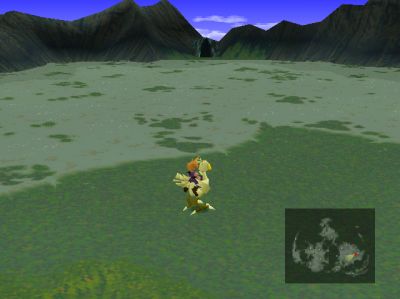
I remember playing Final Fantasy 7 on the Playstation and yelling at the screen every time I was trying to travel across the world and got sucked into a fight. There's a lesson to be learned here in my opinion. Barriers to progress should be varied and interesting.

What are the chances of me getting to the cave without a sodding fight?


The constant interruptions to my progress in FF7, in the same format, and the same stupid sound effect (anyone who knows the FF games will know that dreaded sound) just grew too annoying.

I never finished it by the way.

Thursday, 23 June 2011

Gating player progress

Player gating is a term that is used to describe the various methods of halting a players progress through a map.
Without them players could charge through every encounter like an 8 year old in a particularly boring museum.

Player gating can be a seriously frustrating business. How do I make sure the player kills all the bad guys before the move on?

Its a simple enough problem however trying to make the reasons for player gating plausible to the game world can be a real problem. Heres some of the various methods Ive seen used.

The Puzzle Gate

The simplest form of gate. Solve the puzzle to access the exit.
Think about the breezeblock seesaw puzzle near the beginning of HL2.


The Weapon Gate

The player must obtain a new weapon in order to break through a barrier.
This is a great way to ensure the player doesnt skip a new weapon that they will need later in the map.

HL2:EP1 Pistol Weapon Gate


The NPC Break In Gate

Once the action has finished in the area, a previously blocked route is unblocked by a new enemy NPC being introduced, normally by smashing or blasting through the door.
The slightly overused combine door lock blasts in HL2:EP1 are ax good example of this. The nice tuing about this method is that it keeps the action going.

HL2:EP1 Break In Gate


The Slow Mover Gate

The player activates the gate opening mechanism but it take a very long time for the gate to open. While waiting the player normally has to deal with a slew of enemies and survive long enough to escape.

This is seen over and over again in the Left 4 Dead games and suits the play style well. The other typical scanario is activativing THE SLOWEST LIFT IN THE WORLD!

The crane scene in the Left 4 Dead: Dead Air campaign is a great example of a slow mover gate...


The only downside for SP is that its a timed event, which means that the player can escape without clearing out all the enemies.. thats probably mostly OK though.

The Death Throw Gate

As an enemy dies it's last actions are scripted and open up a new route for the player.
This one is tough to pull off because the NPC once defeated has to perform a number of scripted actions before they finally shuffle off the mortal coil. It stretches the imagination a little but can be more plausible for flying enemies or really big boss npcs that can fall in a certain direction to smash through a wall or something.

Mate Opens Gate

A friendly NPC appears and opens the route forward for you. This will require NPC scripting and can be fun if its done well but its not my preference. The less help the player gets from NPCs the better in my opinion.

Examples of this are prolific in HL2 with Alex hacking combine terminals over and over again.

The Eye Candy Gate

A jaw dropping moment for the player to watch and enjoy that open up a new route for the player. Think the plane crash in the L4D Dead Air campaign. Will take you ages to build but may be well worth it as you know the player will be fully focussed on all your hard work.

The Astounding Dead Air Plane Crash


Let me know if I have missed any methods... or if youve seen any other really cool ways to gate the player.

Falling Into Player Gating Traps

Heres a good example of how a mapper can fall into a player gating trap.

In my map Ep2_aquaduct_4-5 the whole sequence of events begins with the player turning a valve to make water rise in order for them to reach the first level of the chamber.

In order to add some necessary action to the early part of the map I had a nice firefight going on with combine on the higher levels of the chamber shooting down onto the player.

I dont want to lose that but how can I prevent the player from turning the valve and making the water rise before the attacking combine are dead.

I tried having the water rise anyway but the combination of the player having to swim whilst being fired upon was too annoying for playtesters and just wasnt any fun.

In the end I had to settle for a rather unrealistic approach. The combine dont attack until the player turns the valve (at which point the sound of rushing water can be heard) but the water level doesnt rise until the combine are all dead.
You could explain this away as it simply took that long for the water to rise but playtesters also commented that it seemed to take forever for the water level to begin rising...

I can think of no other way that the death of the combine could realistically provide access to the valve..

Heres a link to the map if you want to see for yourself how this works...

Here's the link: http://www.mediafire.com/file/uuszylzw6nfqdzs/ep2_aquaduct-4_5.bsp